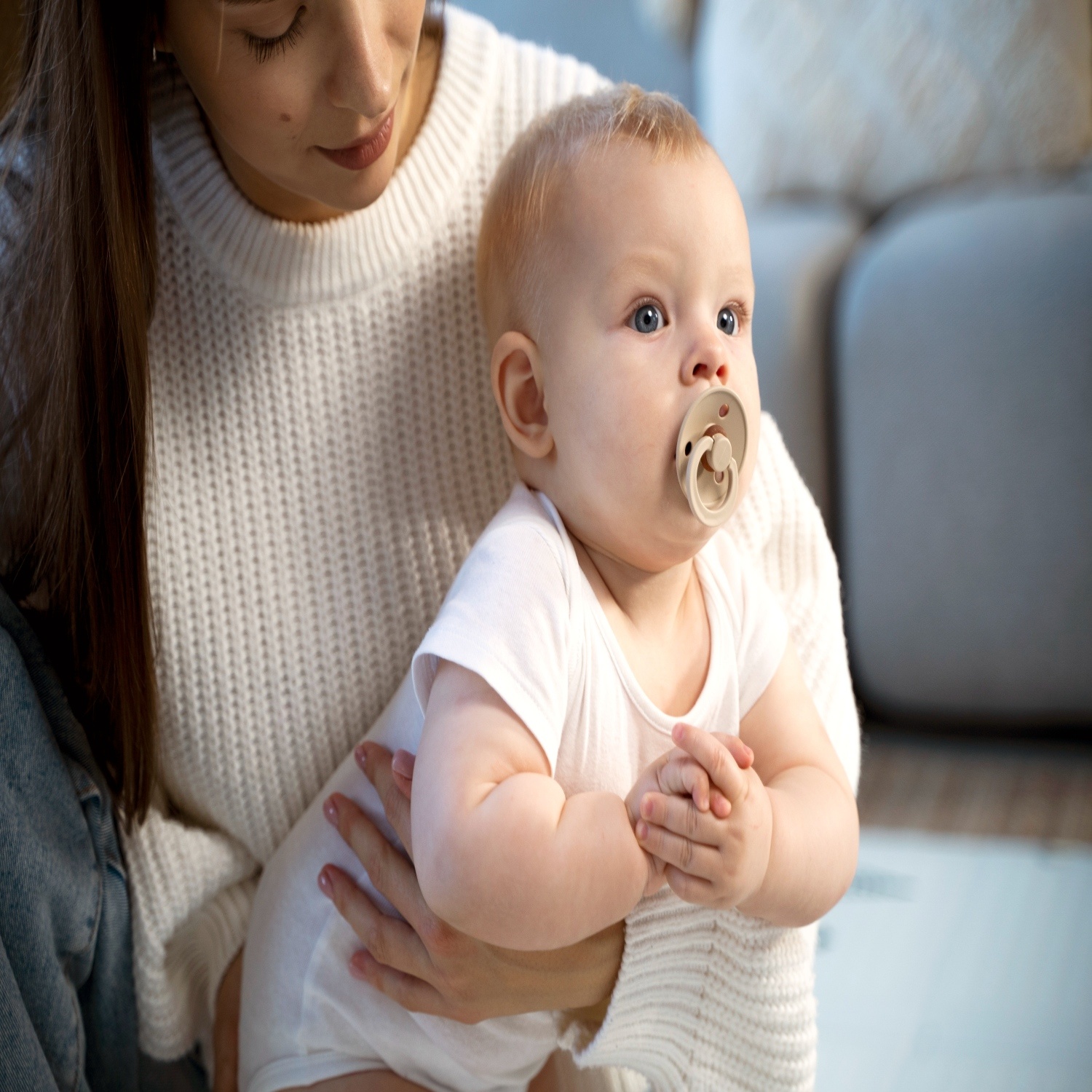
It is common for many parents to notice their baby gags on a pacifier during the early months. This can be startling, but in most cases, it is a normal part of development. Understanding the causes behind infant gagging on pacifiers, and knowing how to respond calmly, can help you support your child’s comfort and safety during this stage.
Understanding why babies gag on pacifiers
If your infant gags on pacifier use, you are not alone. This is especially typical in newborns and young babies. The gag reflex is a natural defensive mechanism that protects your baby’s airway. When something touches the back of their mouth—such as a pacifier—the body responds with gagging, helping to prevent choking hazards.
Pediatric experts reassure parents that a baby gags on pacifier episodes are usually brief and expected at this age. The purpose of the gag reflex is to safeguard the airway until your child develops stronger oral motor skills. Most parents wonder, “Why does my baby gag on pacifier usage one day, but not the next?” The answer is often simply that the reflex is highly sensitive in young infants, especially before six months. It helps to distinguish between gagging (which is usually noisy and protective) and true choking (quieter, with struggling to breathe).
Pacifiers can trigger this reflex mainly when their nipple reaches too far back toward the throat. Every baby’s mouth shape and sensitivity differ, so what bothers one infant may not affect another. Remember that brief gagging is usually not an emergency, but it is always okay to pause and observe your child’s response.
Developmental timeline of the gag reflex
Newborn gagging on pacifier is most common because the gag reflex is particularly strong from birth to about six months. As your baby grows, gains feeding skills, and explores new textures, their oral-motor abilities improve and sensitivity to objects decreases. Around this time, you may notice less frequent gagging automatically.
Certain milestones, like teething or introducing new foods, may temporarily make the gag reflex more pronounced again. This is all part of a normal developmental journey and typically decreases as your baby’s confidence and skills grow.
How pacifier design and fit affect gagging
The design of a pacifier can play a role in whether baby gags on pacifier use becomes more noticeable. Key factors to consider include size, nipple shape (such as orthodontic or bulb styles), materials, and nipple length. There is no universally “best” pacifier—every baby’s mouth and comfort needs are unique.
Pacifiers that are longer, firmer, or have a shape that doesn’t match your baby’s mouth may be more likely to trigger gagging, especially if the nipple pushes further toward the gag reflex zone. Always check age recommendations on pacifier packaging to help select an option that best fits your child’s developmental stage. During or after teething, or when your baby is more oral-sensitive, their tolerance for certain shapes may change.
If you notice that your infant gags on pacifier more often after a size or style switch, it may be time to try a different design or check for fit again. Trust that this process takes some trial and error, and most babies settle into a comfortable preference with time.
Signs a pacifier may not fit well
Here are practical signs your pacifier may not be the right fit:
- Baby gags on pacifier frequently or every time
- Spitting the pacifier out right away
- Difficulty keeping the pacifier in the mouth
- Visible signs of discomfort or frustration
Always use a pacifier labeled for your baby’s age, and observe how deep the nipple goes in the mouth. A good fit should not trigger repeated gagging or distress.
Steps you can take right now to help your baby
If infant gags on pacifier episodes are frequent, there are gentle approaches you can try at home. These steps are non-judgmental and tailored for ease and safety:
- Experiment with different pacifier sizes and shapes
- Double-check that you are using a pacifier appropriate for your baby’s age
- Wait a little while after a large feeding before offering a pacifier
- Hold your baby upright and offer comfort while introducing the pacifier
- Supervise while they are learning to use a new pacifier shape
- Keep pacifiers clean to avoid irritation or overstimulation
Short practice sessions while your baby is calm and alert can help them adjust to a new shape or size. If your baby is teething or experiencing reflux, it is fine to pause use and reintroduce the pacifier when they are settled.
Home checklist for reducing pacifier gagging
- Try a different pacifier shape or size
- Confirm correct age labeling on packaging
- Avoid pacifier right after big meals
- Hold and comfort baby upright during use
- Supervise all new pacifier trials
- Clean regularly to reduce irritation
Remember, patience is key. Most babies outgrow heightened oral sensitivity naturally as months go by.
When to contact your pediatrician — red flags not to ignore
Gagging is usually harmless, but certain signs mean you should seek medical advice right away:
- Skin turns blue or dusky during gagging
- Coughing or choking does not resolve quickly, or baby struggles to breathe
- Trouble feeding or sudden refusal to eat
- Poor weight gain or signs of dehydration
- Excessive drooling not explained by teething
- Gagging that continues or worsens past six months of age
If you see these red flags, contact your pediatrician promptly. Learn to spot medical emergencies with this helpful pediatric choking prevention resource.
Safe sleep and pacifier use — what parents need to know
Using a pacifier safely means following recommended sleep practices. Always place your baby on a firm, flat surface with no wedges or positioners, even if you are worried about gagging or reflux. Pacifiers are shown to reduce the risk of SIDS, but never attach them to strings or clips in the crib. Do not force your baby to take a pacifier if they resist or gag.
For babies with reflux symptoms, consult your pediatrician about safe sleep positions rather than using home remedies or positioning devices. For more details on sleep safety, see these safe sleep guidelines.
Supporting yourself through pacifier challenges
Many parents feel concern or frustration when their baby gags on pacifier use. These feelings are normal—this stage often requires patience, trial, and gentle readjustment. Remember that you are not alone, and most infants quickly outgrow strong gag reflexes. Support can be found through caregivers, trusted healthcare providers, and community resources.
Bring up any concerns or persistent worries at your next well-visit. Always trust your instincts; if something feels off, seeking advice is a sign of attentive parenting. Above all, be kind to yourself—most pacifier-related gagging resolves naturally as your baby grows and adapts.